

What is OWASP 10 ?
. The OWASP Top 10 is a standard awareness document for developers and web application security. It represents a broad consensus about the most critical security risks to web applications.
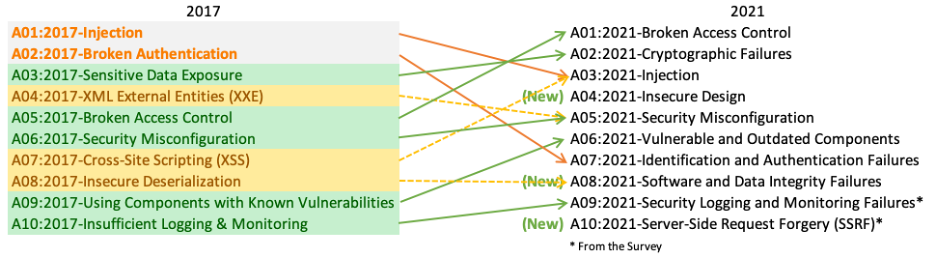
1-Broken Access Control
Description
Access control enforces policy such that users cannot act outside of their intended permissions. Failures typically lead to unauthorized information disclosure, modification, or destruction of all data or performing a business function outside the user’s limits. Common access control vulnerabilities include:
- Violation of the principle of least privilege or deny by default, where access should only be granted for particular capabilities, roles, or users, but is available to anyone.
- Bypassing access control checks by modifying the URL (parameter tampering or force browsing), internal application state, or the HTML page, or by using an attack tool modifying API requests.
- Permitting viewing or editing someone else’s account, by providing its unique identifier (insecure direct object references)
- Accessing API with missing access controls for POST, PUT and DELETE.
- Elevation of privilege. Acting as a user without being logged in or acting as an admin when logged in as a user.
- Metadata manipulation, such as replaying or tampering with a JSON Web Token (JWT) access control token, or a cookie or hidden field manipulated to elevate privileges or abusing JWT invalidation.
- CORS misconfiguration allows API access from unauthorized/untrusted origins.
Force browsing to authenticated pages as an unauthenticated user or to privileged pages as a standard user.

Example Attack Scenarios
Scenario #1: The application uses unverified data in a SQL call that is accessing account information:
An attacker simply modifies the browser’s ‘acct’ parameter to send whatever account number they want. If not correctly verified, the attacker can access any user’s account.
Scenario #2: An attacker simply forces browses to target URLs. Admin rights are required for access to the admin page.
If an unauthenticated user can access either page, it’s a flaw. If a non-admin can access the admin page, this is a flaw.
2-Cryptographic Failures
Description
The first thing is to determine the protection needs of data in transit and at rest. For example, passwords, credit card numbers, health records, personal information, and business secrets require extra protection, mainly if that data falls under privacy laws, e.g., EU’s General Data Protection Regulation (GDPR), or regulations, e.g., financial data protection such as PCI Data Security Standard (PCI DSS). For all such data:
- Is any data transmitted in clear text? This concerns protocols such as HTTP, SMTP, FTP also using TLS upgrades like STARTTLS. External internet traffic is hazardous. Verify all internal traffic, e.g., between load balancers, web servers, or back-end systems.
- Are any old or weak cryptographic algorithms or protocols used either by default or in older code?
- Are default crypto keys in use, weak crypto keys generated or re-used, or is proper key management or rotation missing? Are crypto keys checked into source code repositories?
- Is encryption not enforced, e.g., are any HTTP headers (browser) security directives or headers missing?
- Is the received server certificate and the trust chain properly validated?
- Are initialization vectors ignored, reused, or not generated sufficiently secure for the cryptographic mode of operation? Is an insecure mode of operation such as ECB in use? Is encryption used when authenticated encryption is more appropriate?
- Are passwords being used as cryptographic keys in absence of a password base key derivation function?
- Is randomness used for cryptographic purposes that was not designed to meet cryptographic requirements? Even if the correct function is chosen, does it need to be seeded by the developer, and if not, has the developer over-written the strong seeding functionality built into it with a seed that lacks sufficient entropy/unpredictability?
- Are deprecated hash functions such as MD5 or SHA1 in use, or are non-cryptographic hash functions used when cryptographic hash functions are needed?
- Are deprecated cryptographic padding methods such as PKCS number 1 v1.5 in use?
- Are cryptographic error messages or side channel information exploitable, for example in the form of padding oracle attacks?
Example Attack Scenarios
Scenario #1: An application encrypts credit card numbers in a database using automatic database encryption. However, this data is automatically decrypted when retrieved, allowing a SQL injection flaw to retrieve credit card numbers in clear text.
Scenario #2: A site doesn’t use or enforce TLS for all pages or supports weak encryption. An attacker monitors network traffic (e.g., at an insecure wireless network), downgrades connections from HTTPS to HTTP, intercepts requests, and steals the user’s session cookie. The attacker then replays this cookie and hijacks the user’s (authenticated) session, accessing or modifying the user’s private data. Instead of the above they could alter all transported data, e.g., the recipient of a money transfer.
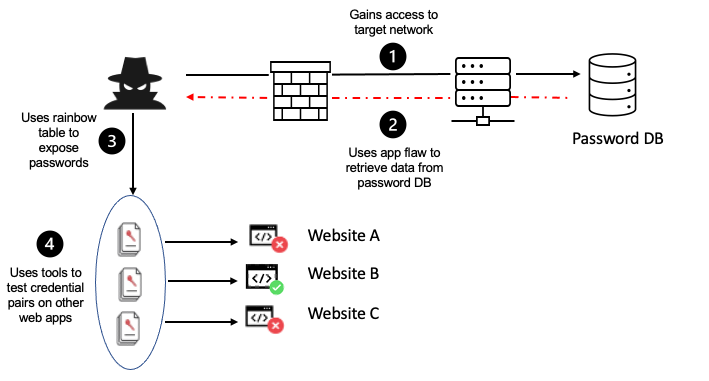
Scenario #3: The password database uses unsalted or simple hashes to store everyone’s passwords. A file upload flaw allows an attacker to retrieve the password database. All the unsalted hashes can be exposed with a rainbow table of pre-calculated hashes. Hashes generated by simple or fast hash functions may be cracked by GPUs, even if they were salted
3-Injection
Description
An application is vulnerable to attack when:
- User-supplied data is not validated, filtered, or sanitized by the application.
- Dynamic queries or non-parameterized calls without context-aware escaping are used directly in the interpreter.
- Hostile data is used within object-relational mapping (ORM) search parameters to extract additional, sensitive records.
- Hostile data is directly used or concatenated. The SQL or command contains the structure and malicious data in dynamic queries, commands, or stored procedures.
Some of the more common injections are SQL, NoSQL, OS command, Object Relational Mapping (ORM), LDAP, and Expression Language (EL) or Object Graph Navigation Library (OGNL) injection. The concept is identical among all interpreters. Source code review is the best method of detecting if applications are vulnerable to injections. Automated testing of all parameters, headers, URL, cookies, JSON, SOAP, and XML data inputs is strongly encouraged. Organizations can include static (SAST), dynamic (DAST), and interactive (IAST) application security testing tools into the CI/CD pipeline to identify introduced injection flaws before production deployment.
Example Attack Scenarios
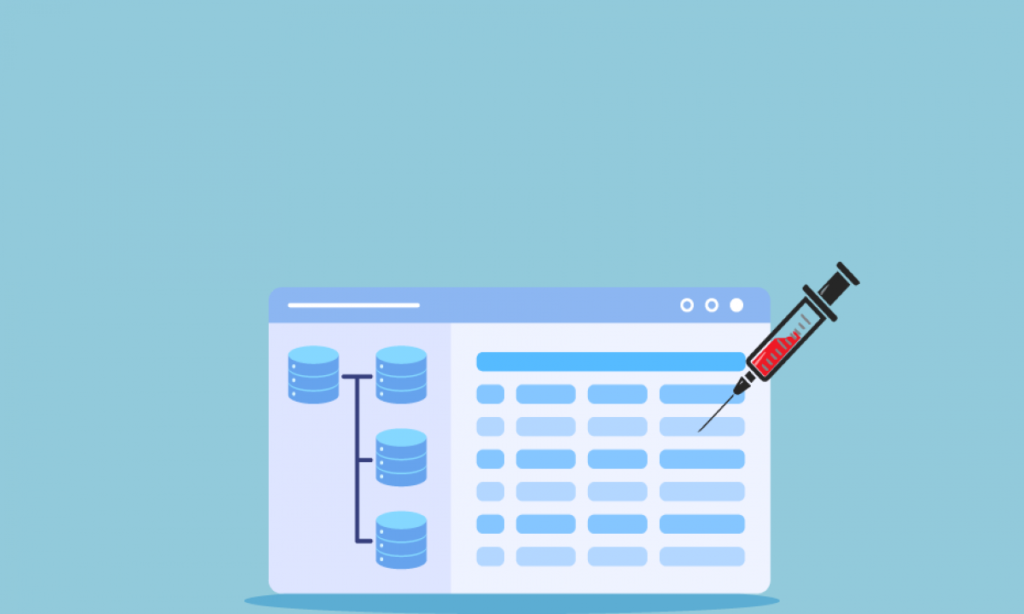
Scenario #1: An application uses untrusted data in the construction of the following vulnerable SQL call
Scenario #2: Similarly, an application’s blind trust in frameworks may result in queries that are still vulnerable
4-insecure design
Description
Insecure design is a broad category representing different weaknesses, expressed as “missing or ineffective control design.” Insecure design is not the source for all other Top 10 risk categories. There is a difference between insecure design and insecure implementation. We differentiate between design flaws and implementation defects for a reason, they have different root causes and remediation. A secure design can still have implementation defects leading to vulnerabilities that may be exploited. An insecure design cannot be fixed by a perfect implementation as by definition, needed security controls were never created to defend against specific attacks. One of the factors that contribute to insecure design is the lack of business risk profiling inherent in the software or system being developed, and thus the failure to determine what level of security design is required.
Requirements and Resource Management
Collect and negotiate the business requirements for an application with the business, including the protection requirements concerning confidentiality, integrity, availability, and authenticity of all data assets and the expected business logic. Take into account how exposed your application will be and if you need segregation of tenants (additionally to access control). Compile the technical requirements, including functional and non-functional security requirements. Plan and negotiate the budget covering all design, build, testing, and operation, including security activities.
Secure Design
Secure design is a culture and methodology that constantly evaluates threats and ensures that code is robustly designed and tested to prevent known attack methods. Threat modeling should be integrated into refinement sessions (or similar activities); look for changes in data flows and access control or other security controls. In the user story development determine the correct flow and failure states, ensure they are well understood and agreed upon by responsible and impacted parties. Analyze assumptions and conditions for expected and failure flows, ensure they are still accurate and desirable. Determine how to validate the assumptions and enforce conditions needed for proper behaviors. Ensure the results are documented in the user story. Learn from mistakes and offer positive incentives to promote improvements. Secure design is neither an add-on nor a tool that you can add to software.
Secure Development Lifecycle
Secure software requires a secure development lifecycle, some form of secure design pattern, paved road methodology, secured component library, tooling, and threat modeling. Reach out for your security specialists at the beginning of a software project throughout the whole project and maintenance of your software. Consider leveraging the OWASP Software Assurance Maturity Model (SAMM) to help structure your secure software development efforts.

Example Attack Scenarios
Scenario #1: A credential recovery workflow might include “questions and answers,” which is prohibited by NIST 800-63b, the OWASP ASVS, and the OWASP Top 10. Questions and answers cannot be trusted as evidence of identity as more than one person can know the answers, which is why they are prohibited. Such code should be removed and replaced with a more secure design.
Scenario #2: A cinema chain allows group booking discounts and has a maximum of fifteen attendees before requiring a deposit. Attackers could threat model this flow and test if they could book six hundred seats and all cinemas at once in a few requests, causing a massive loss of income.
Scenario #3: A retail chain’s e-commerce website does not have protection against bots run by scalpers buying high-end video cards to resell auction websites. This creates terrible publicity for the video card makers and retail chain owners and enduring bad blood with enthusiasts who cannot obtain these cards at any price. Careful anti-bot design and domain logic rules, such as purchases made within a few seconds of availability, might identify inauthentic purchases and rejected such transactions.
5-Security Misconfiguration
Description
The application might be vulnerable if the application is:
- Missing appropriate security hardening across any part of the application stack or improperly configured permissions on cloud services.
- Unnecessary features are enabled or installed (e.g., unnecessary ports, services, pages, accounts, or privileges).
- Default accounts and their passwords are still enabled and unchanged.
- Error handling reveals stack traces or other overly informative error messages to users.
- For upgraded systems, the latest security features are disabled or not configured securely.
- The security settings in the application servers, application frameworks (e.g., Struts, Spring, ASP.NET), libraries, databases, etc., are not set to secure values.
- The server does not send security headers or directives, or they are not set to secure values.
Without a concerted, repeatable application security configuration process, systems are at a higher risk.
Example Attack Scenarios
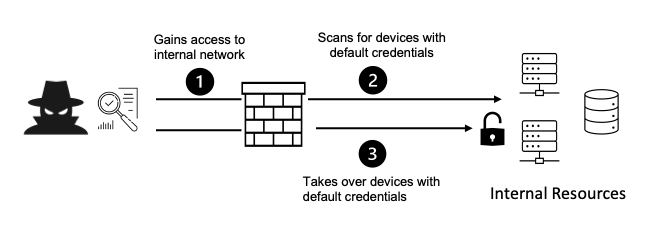
Scenario #1: The application server comes with sample applications not removed from the production server. These sample applications have known security flaws attackers use to compromise the server. Suppose one of these applications is the admin console, and default accounts weren’t changed. In that case, the attacker logs in with default passwords and takes over.
Scenario #2: Directory listing is not disabled on the server. An attacker discovers they can simply list directories. The attacker finds and downloads the compiled Java classes, which they decompile and reverse engineer to view the code. The attacker then finds a severe access control flaw in the application.
Scenario #3: The application server’s configuration allows detailed error messages, e.g., stack traces, to be returned to users. This potentially exposes sensitive information or underlying flaws such as component versions that are known to be vulnerable.
Scenario #4: A cloud service provider (CSP) has default sharing permissions open to the Internet by other CSP users. This allows sensitive data stored within cloud storage to be accessed.

Leave a Reply